Updated April 17, 2026. This page focuses on Dinosaur Game History, including the browser context, key dates, memorable updates, and the official facts that explain why Chrome Dino spread so widely.
On This Page
- The origin of Chrome Dino
- Dinosaur Game timeline
- Why the dinosaur theme worked
- Why the game became popular
- Important updates and milestones
- Why the history still matters
- Dinosaur Game History FAQ
The Origin of Chrome Dino
The history of the dinosaur game starts with a simple browser problem. Chrome users needed something better than a dead-end error page when they lost internet access. Instead of leaving the screen empty and frustrating, the Chrome team turned the offline page into a small surprise. Press the key, and the dinosaur starts running.
That choice sounds small, but it was smart product design. It made Chrome feel friendlier. It gave users a moment of play at exactly the point when they were most likely to feel annoyed. And because the interaction was so simple, people remembered it immediately.
Why this history matters: the game was not created as a full standalone release. It was built as a browser Easter egg, which is exactly why it feels different from most web games.
Dinosaur Game Timeline
Early 2014
The idea of an endless runner inside the offline page was born. The prehistoric joke matched the feeling of going back to a time before Wi-Fi.
September 2014
The Easter egg was submitted during a redesign of the offline page, turning a browser error moment into a hidden mini-game.
December 2014
After performance work and rewrites, the game had scaled to all platforms, helping it spread much more widely.
2018 and after
Google said the game was being played around 270 million times every month and had already become a Chrome icon with later additions like pterodactyls, night mode, and special editions.
Why the Dinosaur Theme Worked
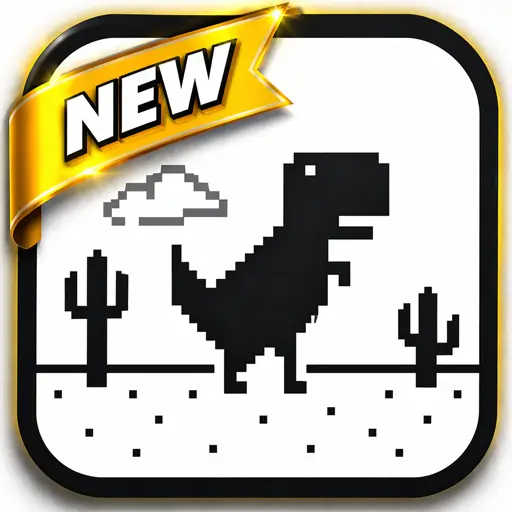
The dinosaur was not random. The offline page idea played on a prehistoric joke. No internet feels like being thrown back to the age before Wi-Fi, so the T-rex, desert, and pixel style all fit naturally. That theme made the game instantly understandable even before the player pressed anything.
The visual style helped too. The look stayed clean, readable, and lightweight, which mattered for a browser feature that had to load fast and work across different devices. The team kept the motion simple and leaned into old-school game logic: run, duck, and jump.
Why the Game Became Popular
Most web games need discovery, promotion, or downloads. Chrome Dino had a different advantage. Chrome already had the audience. The game appeared during a common problem, which meant discovery felt organic rather than forced. People did not go searching for it at first. They stumbled into it.
That accidental discovery helped the game spread through screenshots, social posts, office conversations, classrooms, and word of mouth. Later, Google even added chrome://dino so people could open the game without needing to go offline, turning a hidden feature into something closer to an arcade shortcut.
Key historical fact
Chrome Dino lasted because it solved two problems at once. It made the offline page less frustrating, and it delivered a simple skill loop that people wanted to repeat even after the surprise was gone.
Important Updates and Milestones
- Cross-platform rollout: early technical work helped the game move beyond a narrow desktop-only feeling.
- Pterodactyls and night mode: these additions gave longer runs more variety and made the game feel less static over time.
- chrome://dino: Google created a direct URL so players could access the game without disconnecting from the internet.
- Anniversary edition: special event changes showed the team still treated the dino as part of Chrome culture.
- Lock Screen presence on iOS: Google later highlighted the beloved dino game again through Chrome Lock Screen widgets on iPhone, showing the mascot stayed culturally useful beyond the original offline page.
Why Dinosaur Game History Still Matters
History pages only work when they answer a real question. In this case, people do want to know why a tiny runner became so recognizable. The answer is not only nostalgia. The game sits at the intersection of product design, browser culture, humor, and replay value. It was useful, memorable, and easy to share.
That is why Dinosaur Game History still deserves its own page. It explains the browser context. It clarifies why the game feels different from a normal web runner. And it gives players a better understanding of why Chrome Dino still shows up in searches, clones, remakes, and guide pages years after its original rollout.
Dinosaur Game History FAQ
Why was the dinosaur game created?
The Chrome team built it as an endless runner Easter egg for the offline page, turning a dead-end browser moment into something playful and memorable.
When did the dinosaur game start?
The idea began in early 2014. The Easter egg was submitted in September 2014, and the game had scaled to all platforms by December 2014.
Why did Chrome Dino become popular?
It appeared inside a browser people already used, loaded quickly, and transformed a frustrating no-connection screen into a repeatable challenge.
What is chrome://dino?
It is a direct Chrome URL Google created so people could play the game without going offline, with a larger arcade-style view.
How long does it take to beat the dinosaur game?
Google said the game was built to max out at approximately 17 million years, so for normal players it behaves like an endless runner rather than a short game with a typical ending.
Continue exploring
If you want the playable side of the topic, continue with Chrome Dinosaur Game, No Internet Dinosaur Game, or How to Play Dinosaur Game.